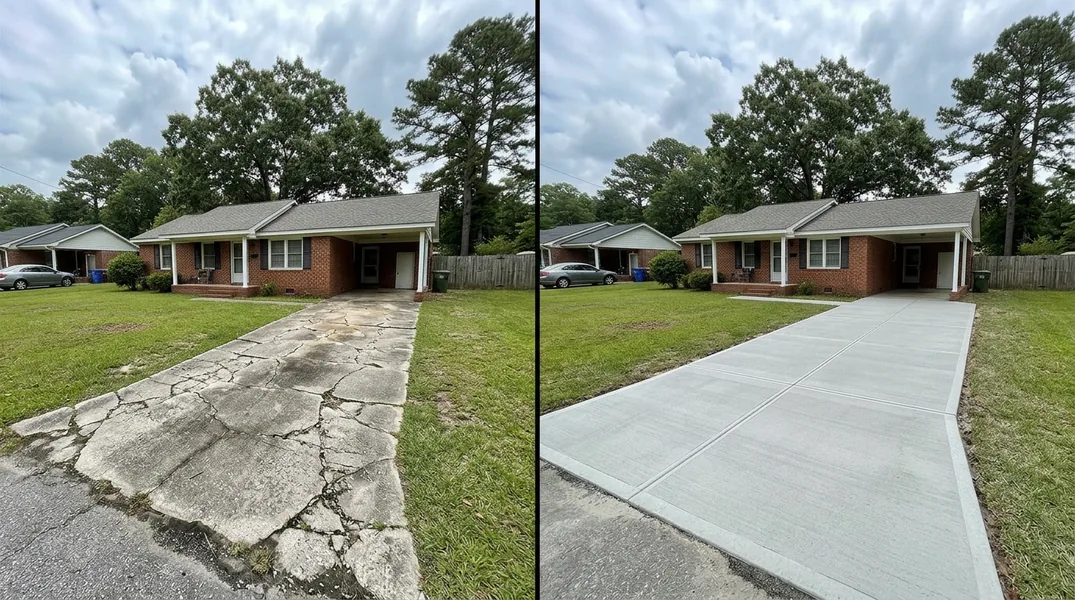
Why Timing Matters for Concrete Pouring in Fayetteville
If you're planning a Concrete Driveways project in Fayetteville, you might assume that concrete can be poured any time of year. In reality, the timing of your project has a significant impact on how well your concrete cures, how durable it becomes, and whether you'll face costly problems down the road. Many homeowners don't realize that concrete curing heat and humidity play critical roles in determining the final strength and appearance of their finished surface.
North Carolina's climate presents unique challenges for concrete contractors. The state experiences four distinct seasons with temperature swings that can affect the concrete curing process. Pouring concrete during the wrong season can lead to premature cracking, weak spots, scaling, and a surface that deteriorates faster than it should. Understanding when to pour concrete in North Carolina will help you avoid these pitfalls and ensure your investment lasts for decades.
Spring: The Ideal Concrete Pouring Season in Fayetteville
Spring, typically from mid-April through May, is widely considered the best time to pour concrete in Fayetteville. During these months, daytime temperatures usually range from 60 to 75 degrees Fahrenheit, which creates near-perfect conditions for concrete curing. The moderate warmth allows the concrete to cure gradually and evenly, developing maximum strength without the stress of extreme heat or cold.
Spring weather also tends to be more stable and predictable compared to other seasons. Rainfall is common, but a professional Fayetteville concrete contractor can plan around weather forecasts and protect freshly poured concrete from heavy rain during the critical first 24 to 48 hours. The combination of mild temperatures and adequate moisture in the air creates an environment where concrete hydrates properly, resulting in a durable, long-lasting surface. If you're considering Concrete Patios or other projects, spring scheduling often means faster project completion and superior results.
Fall: Your Second Best Option for Concrete Projects
Fall, particularly September through early November, offers the second-best window for pouring concrete in North Carolina. As temperatures cool from summer heat into the 60s and 70s, conditions become favorable for concrete curing. Fall provides many of the same advantages as spring, including moderate temperatures that allow concrete to cure steadily without thermal shock or stress.
One advantage of fall pouring is that the intense summer heat has already passed, so you won't deal with the rapid evaporation that can plague summer projects. Additionally, fall often brings lower humidity levels compared to summer, which can actually benefit the curing process if managed correctly. However, as November approaches, temperatures begin dropping into the 40s, and you'll want to complete your project before winter weather arrives. If you need Concrete Repair & Resurfacing work or a new driveway, fall scheduling can be an excellent alternative to spring.
Summer Heat and Humidity: Challenges for Concrete Curing
Summer in North Carolina brings heat and humidity that can complicate the concrete curing process. From June through August, daytime temperatures often exceed 85 degrees Fahrenheit, and humidity levels can soar. While concrete won't fail in summer heat, these conditions create several challenges that require extra attention from experienced contractors. High temperatures cause concrete to cure too quickly on the surface while the interior remains soft, leading to cracking and uneven strength development.
Concrete curing heat and humidity work together to create another problem: rapid surface evaporation. When the sun beats down on freshly poured concrete, water evaporates from the top layer faster than it should, creating stress that leads to shrinkage cracks. Professional contractors can mitigate these issues through careful planning, using concrete additives, keeping the surface moist during curing, and providing shade, but these measures add time and expense to your project. If summer is your only option, discuss these challenges with your contractor and ask about their specific strategies for managing the heat.
Winter Concrete Pouring: Why You Should Avoid It
Winter is the least favorable season for pouring concrete in North Carolina. From December through February, temperatures frequently drop below 50 degrees Fahrenheit, and frost is a genuine concern. Concrete requires a minimum temperature range of 50 to 60 degrees Fahrenheit to cure properly. When temperatures fall below this range, the hydration process slows dramatically, and concrete may not develop adequate strength for months.
Cold weather also introduces the risk of freeze-thaw damage. If concrete is exposed to freezing temperatures before it has fully cured, water trapped inside the concrete can freeze, expand, and cause internal cracking and scaling. This damage often doesn't appear immediately, but manifests as surface deterioration and structural weakness over the following years. Unless your project is absolutely urgent, avoid scheduling Stamped & Decorative Concrete or driveway work during winter months. The short-term convenience of winter scheduling will cost you far more in repairs and premature replacement.
Planning Your Concrete Project: What to Do Now
Now that you understand when to pour concrete in North Carolina, the next step is to plan your specific project. If you're in Fayetteville or nearby areas like Hope Mills or Spring Lake, contact Fayetteville Concrete to discuss your timeline and get professional guidance tailored to your situation. Every property is unique, and factors like shade, soil drainage, and your specific concrete project type can influence the ideal pouring season.
The best approach is to reach out for a free estimate during your preferred season. Our team can assess your site, discuss the concrete curing heat and humidity conditions you'll face, and recommend the optimal timing for your project. Whether you need a new driveway, patio, or decorative concrete work, we'll help you schedule at the right time to ensure maximum durability and beauty. Call Fayetteville Concrete today at (910) 672-6909 to get started, or visit our website at https://fayetteville-nc-concrete.com to learn more about our services and pricing.
Looking for a professional concrete contractor in Fayetteville? Fayetteville Concrete responds fast for all your concrete needs.
Get a Free QuoteOur services: Concrete Driveways · Concrete Patios · Stamped & Decorative Concrete