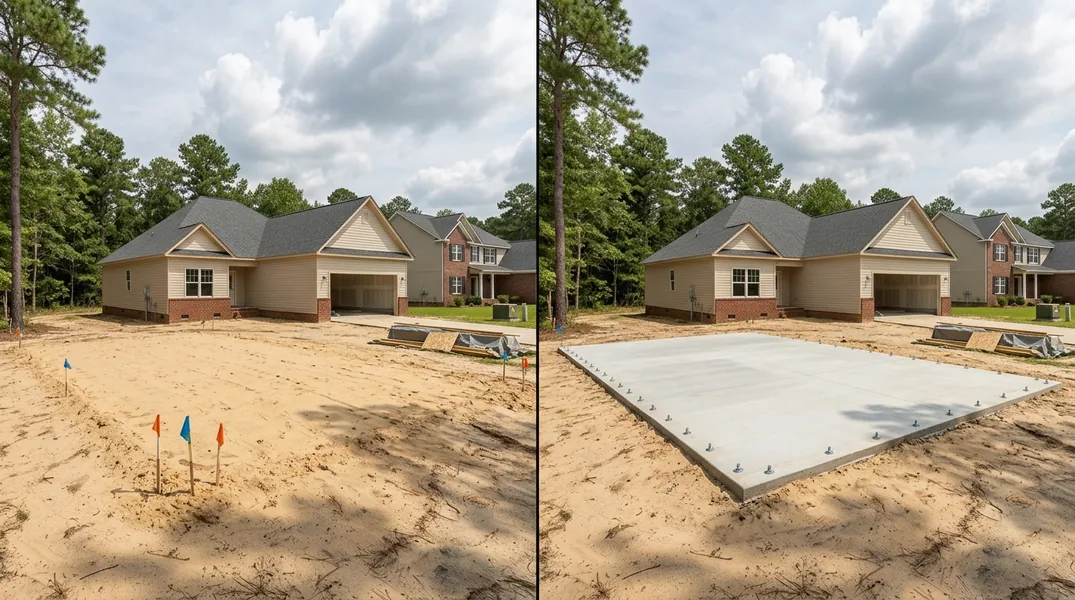
Understanding New Construction Concrete Slabs in Fayetteville
Buying a new construction home in Fayetteville is exciting, but the foundation literally supports everything that comes after. The concrete slab beneath your new home is not just a surface, it's a critical structural component that will affect the durability and stability of your entire house for decades to come. Many homebuyers focus on finishes, floor plans, and appliances during the final walkthrough, but they overlook one of the most important elements: the quality and condition of the concrete foundation slab.
A properly poured and finished concrete slab should be level, free of major cracks, and installed according to local building codes. In Fayetteville, where the climate brings seasonal moisture changes and occasional freeze-thaw cycles, a well-constructed slab is essential. Understanding what builders should deliver and what you should inspect before closing will protect your investment and help you avoid costly repairs down the road.
What to Look for During Your Final Slab Inspection
Before you sign the closing papers, schedule a thorough walkthrough of your new home's concrete slab. Start by examining the surface for cracks. Minor hairline cracks are normal in concrete as it cures, but any crack wider than one-eighth of an inch should raise a red flag. Look for patterns in the cracks as well. Random cracks scattered across the slab are often just cosmetic, but cracks that follow a grid pattern or radiate from a central point may indicate structural movement or settling issues that need professional evaluation.
Check the slab for proper slope and drainage. Concrete should slope away from your home's foundation at a rate of about one inch per ten feet. This slope prevents water from pooling against the foundation, which can lead to moisture intrusion and foundation damage over time. Walk the perimeter of your home and observe whether water would naturally drain away from the structure. If you notice areas where water would collect or flow toward the house, document this with photos and report it to your builder immediately.
Also inspect the edges and seams where the slab meets the foundation walls or where separate concrete sections connect. These areas should be sealed properly to prevent water infiltration. Look for gaps, missing caulk, or separation between the concrete and the foundation wall. Any of these conditions can allow moisture to penetrate and cause problems with your home's structural integrity and interior spaces.
Understanding New Home Foundation Warranty Coverage
Most builders in North Carolina provide a limited warranty on structural components, including the concrete foundation slab. A typical new home foundation warranty covers defects in materials and workmanship for a period of one to ten years, depending on the builder and the specific warranty terms. It's crucial that you understand exactly what your builder's warranty covers before closing. Read the warranty documentation carefully and ask your builder's representative to explain any terms you don't understand.
Foundation warranties generally cover structural defects that affect the integrity of the home, such as major settlement, heaving, or significant cracking that compromises the slab's ability to support the structure. However, they typically do not cover cosmetic cracks, minor settling, or damage caused by environmental factors like earthquakes or extreme weather events. Some warranties also exclude damage caused by poor drainage, landscaping changes, or homeowner modifications. Understanding these limitations means you'll know whether a problem you discover is covered or your responsibility to repair.
Keep your warranty documentation in a safe place and maintain records of any issues you report to your builder. If you discover a foundation problem during the warranty period, notify your builder in writing as soon as possible. Many warranties require prompt notification and allow builders a reasonable time to inspect and repair the issue. If your builder disputes the claim or refuses to address a legitimate structural defect, you may need to consult with a structural engineer or attorney to protect your rights.
Common Concrete Slab Issues in North Carolina Homes
North Carolina's climate presents specific challenges for concrete foundations. The region experiences significant seasonal temperature swings and occasional freeze-thaw cycles, particularly during winter months. These temperature fluctuations cause concrete to expand and contract, which can lead to cracking over time. Additionally, Fayetteville receives a fair amount of rainfall, and improper drainage around the foundation can allow water to accumulate beneath or around the slab, causing erosion and settlement issues.
One common issue in new construction is efflorescence, a white powdery substance that appears on concrete surfaces. While efflorescence itself is not structurally dangerous, it indicates that water is moving through the concrete, which could signal a moisture problem. Another concern is differential settlement, where different portions of the slab settle at different rates. This can occur if the soil beneath the slab was not properly prepared or compacted before pouring. Differential settlement can cause floors to become uneven, doors and windows to stick, and cracks to develop in both the concrete and the home's framing.
Concrete spalling, where the surface of the slab flakes or chips away, is another issue to watch for. This typically occurs when water seeps into the concrete, freezes, and expands, causing the surface to deteriorate. Poor air entrainment during the concrete mix can make spalling more likely in freeze-thaw environments. If you notice any of these issues during your inspection, document them thoroughly and bring them to your builder's attention before closing.
When to Call a Professional Inspector or Structural Engineer
While a visual walkthrough is helpful, some foundation issues require professional expertise to identify. If you notice significant cracks, uneven floors, gaps between the slab and the foundation wall, or any signs of water damage in the basement or crawl space, consider hiring a structural engineer to conduct a professional inspection before closing. A structural engineer can assess whether issues are cosmetic or structural and provide recommendations for repair or further monitoring.
Professional inspectors and engineers have specialized tools and knowledge to detect problems that untrained eyes might miss. They can measure crack widths precisely, assess soil conditions, evaluate drainage patterns, and determine whether settling is occurring. The cost of a professional inspection, typically ranging from $300 to $800, is a worthwhile investment when you're purchasing a property worth hundreds of thousands of dollars. If a professional identifies significant issues, you have leverage to negotiate repairs with the builder before closing, or to adjust your offer price to account for future repairs.
If you're in the Fayetteville area and have concerns about your new construction slab, the team at Fayetteville Concrete can provide expert guidance. While we specialize in Concrete Driveways and Concrete Repair & Resurfacing, our deep knowledge of concrete construction and local conditions can help you understand what you're seeing. Feel free to contact us at (910) 672-6909 if you'd like to discuss any concerns about your new home's foundation.
Steps to Take Before Closing on Your New Home
Create a detailed inspection checklist before your final walkthrough. Include items like crack assessment, drainage verification, surface condition, edge sealing, and any visible signs of water damage. Take clear photos and notes of everything you observe. If you find issues, request a written response from your builder explaining how and when they will be addressed. Don't accept verbal promises, get everything in writing so you have documentation if problems persist after closing.
Request copies of all concrete inspection reports and certifications from your builder. Many builders have concrete tested for strength and quality during the construction process. These reports can provide valuable information about whether the concrete was installed according to specifications. Ask your builder about the concrete mix design, the contractor who poured the slab, and any issues that were encountered during installation.
Finally, understand your recourse options. Most purchase agreements include contingencies for structural defects discovered during inspections. If you discover significant foundation issues during your final walkthrough, you may be able to negotiate repairs, credits, or adjustments to your offer. Don't rush through the closing process. Take the time to thoroughly inspect the concrete slab and understand the warranty coverage you're receiving. Your home's foundation is too important to overlook, and addressing issues before closing is far easier and less expensive than dealing with them after you own the property.
Looking for a professional concrete contractor in Fayetteville? Fayetteville Concrete responds fast for all your concrete needs.
Get a Free QuoteOur services: Concrete Driveways · Concrete Patios · Stamped & Decorative Concrete